





Mathematical Thinkers Like Me
Project Overview
Mathematical Thinkers Like Me is an online collaborative problem solving program that supports students in grades 6th through 8th in developing their identity and strengths as mathematical thinkers with strong executive function skills (EFs).
Mathematical Thinkers Like Me uses an online environment called Virtual Math Teams (VMT) where students work together to solve mathematical problems, building both conceptual understanding and collaborative discourse practices. The program emphasizes intentional reflection and mathematical identity development, orienting students toward the practices and narratives that support them in seeing themselves as mathematical thinkers. As students strengthen their ability to collaborate online with dynamic mathematics, they develop the EFs they need to tackle complex problems.
Project Approach
Mathematical Thinkers Like Me’s approach weaves together math, executive function skills, and equity to help students strengthen their problem solving abilities and see themselves as capable mathematical thinkers.

Mathematics
Harnesses collaborative discourse and dynamic mathematics to address conceptual understanding and problem solving in grades 6–8.

Executive Function Skills
Explores students’ use of EF skills in practice, through the process of online collaborative problem solving

Equitable Learning Experiences
Cultivates students’ mathematical identities, agency, and sense of belonging through collaborative learning and “Unit Zero.”
Project Impact
Mathematical Thinkers Like Me has produced measurable impact in classrooms, reaching thousands of students and educators, while contributing research findings to advance math education.

Key Insights and Innovations
Collaborative online environment redefines how students engage with mathematics
Mathematical Thinkers Like Me uses the Virtual Math Teams (VMT) platform to create an interactive online space where students solve problems together. Through collaborative text chat and shared dynamic mathematics, students make their thinking visible, co-construct knowledge, and build confidence in expressing ideas. The quasi-anonymous structure helps historically marginalized students feel safer contributing, leading to higher engagement and more curiosity-driven mathematical work.
‘Unit Zero’ builds identity, belonging, and readiness to collaborate
The Mathematical Thinkers Like Me team designed a “Unit Zero” to introduce students to the program’s core ideas, including identity, belonging, and growth mindset. Through storytelling, reflection, and group activities, students explore what it means to be a mathematical thinker and develop the EFs that help them succeed in the collaborative environment. This foundation supports deeper, more equitable participation throughout subsequent units.
Equity-focused assessment links executive function skills, identity, and mathematical growth
To understand how collaboration and EFs shape learning, the team created the Mathematical Thinkers Like Me Equity Bundle—a suite of validated assessments exploring relationships among EFs, identity, and math performance. These tools provide a more holistic view of student growth, capturing an integrated view of student identity and experience.
Deep co-design with teachers and students, resulting in professional development communities and student-created videos
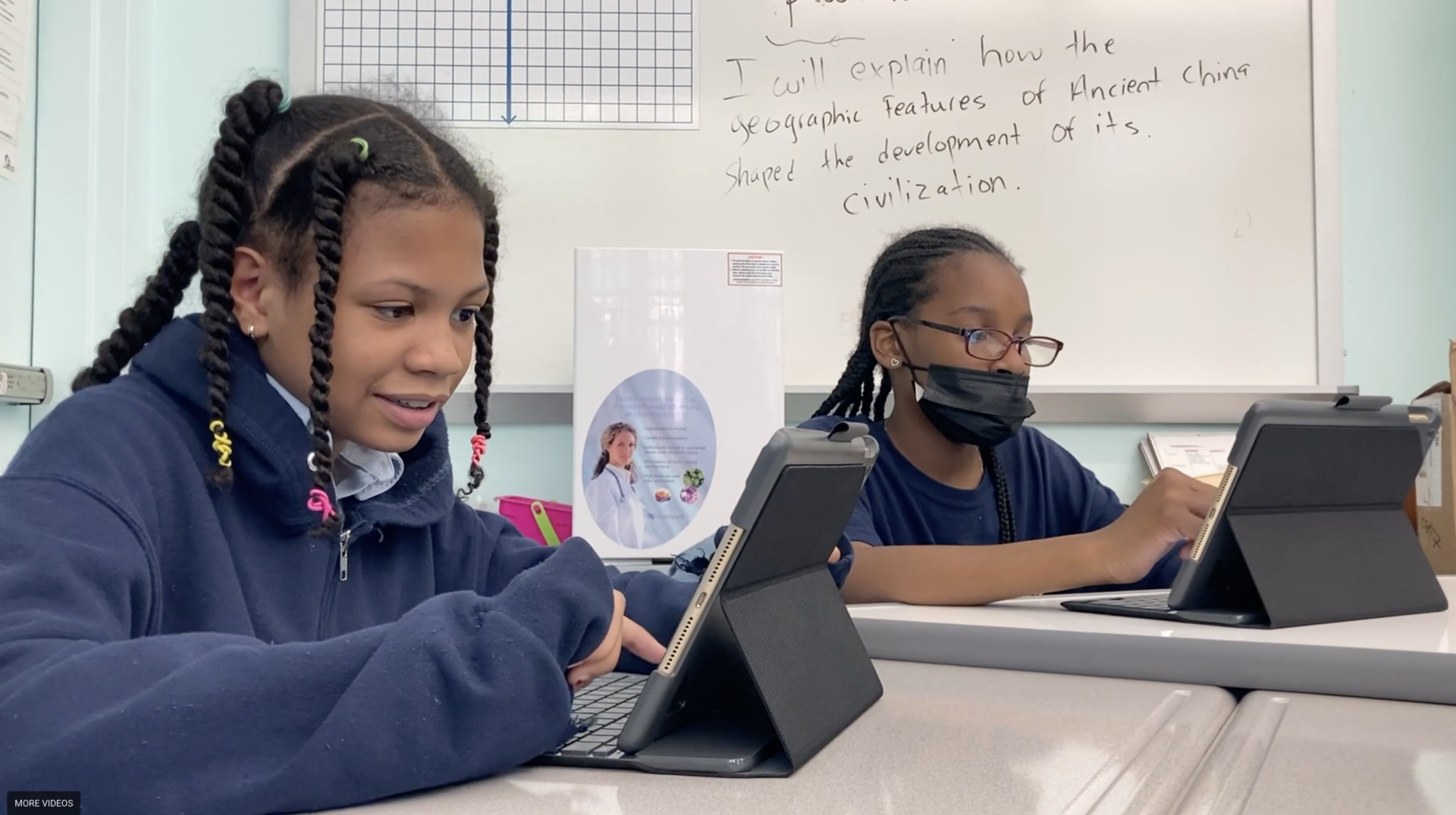
The Mathematical Thinkers Like Me team worked closely with students, partner teachers, and districts through regular co-design sessions and professional learning communities. Teachers helped design and test the “Unit Zero” activities, shape facilitation strategies for equitable collaboration, and refine the structure and timing of lessons based on real classroom data. Students interacted with the design team to improve VMT’s functionality. The Summer Institute brought teachers together to share insights and examine student work, ensuring the program evolved in step with educators’ needs. Students co-created a series of videos about EFs in context, featuring student-users as expert narrators.
Research Highlights
Acknowledgements
We extend our sincere appreciation to the many people who made this project possible, including Nicole Allard, Patricia Buenrostro, Christina DeSanto, Amanda Grossi, Lani Horn, Michael Jacobson, Dan Meyer, Natasha Pared, Darlene Parisi, Damon Patterson, Steve Post, Teresa Santos, Kelly Urena, and Karla Venezia.
We also gratefully acknowledge the leadership of the 21st Century Partnership for STEM Education, in partnership with sub-award recipients at Desmos, Rutgers University, Swarthmore College, and the University of Sydney.
Explore Our R&D Projects
The EF+Math portfolio of R&D projects developed innovative math learning products and advanced research on mathematics learning, executive function skills, and equitable learning experiences using inclusive R&D methods.