




MAT+EF
Project Overview
MAT+EF takes a fundamentally different approach to assessment by recognizing that executive function skills (EFs)—like working memory, inhibitory control, and cognitive flexibility—are dynamic and context-dependent.
Traditional EF assessments typically measure students’ EF skills at a single point in time. However, the MAT+EF team recognizes that a student’s EF skills change from day to day based on their sleep, stress, health, and other contextual factors. Understanding these fluctuations is essential because a student who struggles with a math concept on one day might be cognitively ready to grasp it on another. The MAT+EF team developed a digital assessment system co-designed with students and teachers that unlocks the possibility of understanding these daily fluctuations in students’ EF skills and makes them visible for the first time.
The tool first establishes each student’s baseline performance and then uses machine learning algorithms to adapt in real time to efficiently estimate daily fluctuations using only a fraction of the questions traditional assessments require. This efficiency breakthrough—requiring just 20-30% of typical assessment time—makes it feasible to implement regularly, opening the door for teachers to understand when each student’s EFs are at, above, or below their baseline and adjust instruction accordingly. The tool provides teachers with actionable, strengths-focused data to support personalized learning and promote more equitable outcomes in math learning.
To learn more and get in touch, explore the Brain Game Center at Northeastern University and Dennis Barbour’s Lab at Washington University in St. Louis.
Project Approach
MAT+EF’s approach integrates innovative assessment, adaptive modeling, and equitable design to capture students’ math and EF skills dynamically, revealing how learning fluctuates day to day and providing insights to support every learner.

Innovative Assessment
Validated assessment of math and EF skills that is engaging and accessible.

Adaptive Algorithm
Next-generation modeling strategy learns from assessment data to adapt the assessment for each learner.

Designed for All Learners
Low-cost tool that was co-designed with diverse students and teachers to reflect their needs, and an algorithm with built-in bias checks to ensure predictions are accurate across student groups.
Project Impact
The MAT+EF Project’s co-designed assessment and novel machine learning algorithms are shaping better ways to measure and support math learning, while generating insights that advance how we think about and approach assessment.

Key Insights and Innovations
Engaging digital assessment of executive function skills and math designed with educators and students for practical use in the classroom
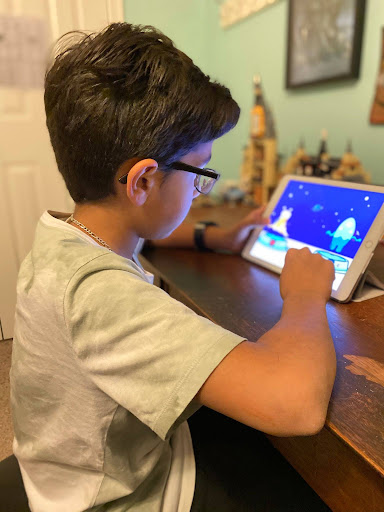
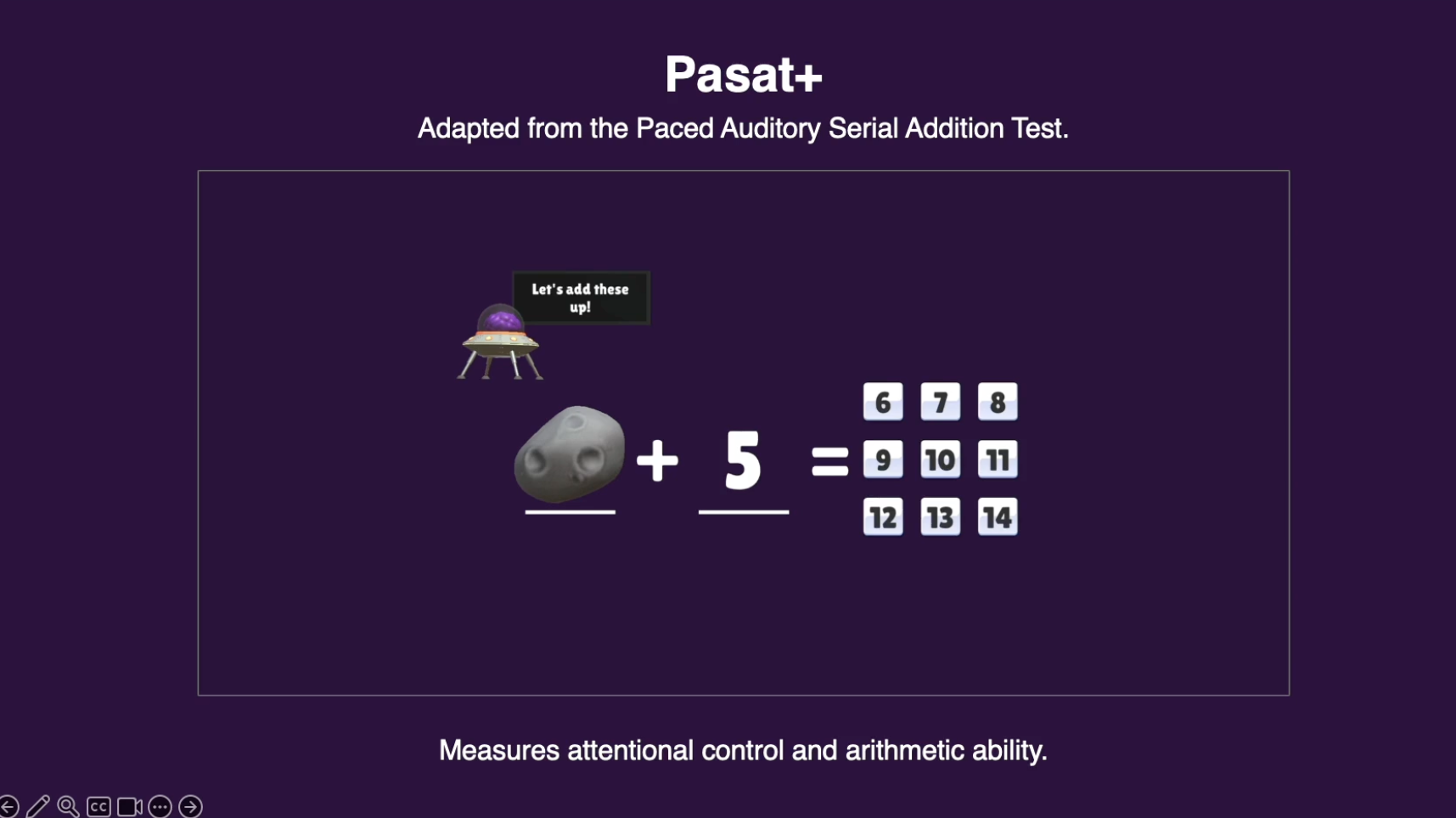
The MAT+EF team created a suite of 11 engaging digital assessments to measure math and EFs—such as cognitive flexibility, inhibition, and working memory—for elementary students. Developed with input from educators and students, the tasks feature tutorials, playful themes, and animations. The assessments work seamlessly across devices and classroom settings without requiring special equipment or one-on-one facilitation. The assessment suite is complete with features like flexible coding, adaptive challenges, and a sophisticated researcher dashboard to track participation and results. In 13 studies with more than 700 participants, the MAT+EF assessments are shown to be efficient, accurate, reliable, and easy to administer. MAT+EF is practical for real-world classrooms and was used in a large-scale evaluation of MathFluency+ with over 3,000 students across eight districts. MAT+EF is expanding access to measures of math and EF skills for all learners.
Innovative machine learning algorithms enable daily EF skill assessment through significant reduction in data demands
Traditional EF skill assessments are too time-consuming for daily classroom use and often require that students be assessed outside of instruction. The MAT+EF assessment is enhanced by sophisticated machine learning algorithms that learn from each student’s comprehensive baseline assessment and continuously update items based on student responses. The algorithm represents a significant advancement over existing models, as it enables the daily battery to be personalized using 70% less data than traditional models, while still maintaining accuracy. The pairing of the algorithm with the assessment makes it feasible to track how students’ EFs fluctuate from day to day and better understand how these changes affect learning, and paves the way for integration of the algorithm into other assessments in the future.
Co-designed dashboards make data actionable for teachers and highlight students’ strengths
The MAT+EF team developed an educator dashboard that translates complex student assessment data into qualitative, actionable insights that highlight student strengths. Through co-design with teachers, the team created innovative visualizations that help communicate patterns in EFs through asset-based graphical representations rather than flagging deficits or using numbers that could promote non constructive comparisons. This approach ensures that assessment data can highlight students’ strengths to inform learning and instruction.
See MAT+EF in Action
Research Highlights
Acknowledgments
We gratefully acknowledge the leadership of Northeastern University and Washington University in St. Louis, with collaboration from the University of Pennsylvania, the University of Maribor, and the University of Maryland, College Park.
Explore Our R&D Projects
The EF+Math portfolio of R&D projects developed innovative math learning products and advanced research on mathematics learning, executive function skills, and equitable learning experiences using inclusive R&D methods.